




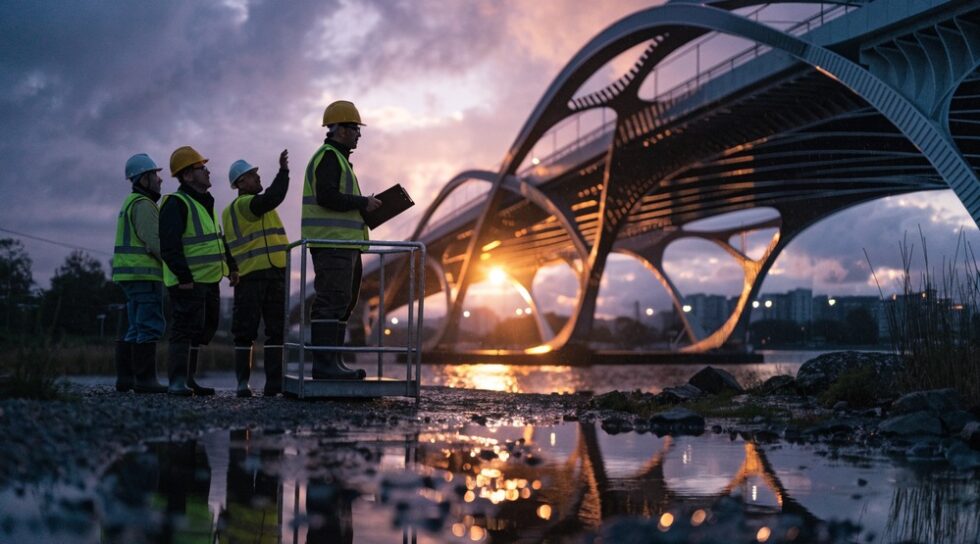
Imagine a world where artificial intelligence designs bridges that outperform human engineers in both efficiency and safety. This isn’t a futuristic fantasy; it’s the reality we’re grappling with in 2026. As AI systems become more adept at analyzing complex data and generating innovative designs, the construction industry is witnessing a seismic shift. But with this leap in technology comes a pressing question: when AI designs bridges better than engineers, who is held accountable if something goes wrong?
Recent advancements in AI have enabled machines to process vast amounts of data, simulate various environmental conditions, and optimize designs in ways that were previously unimaginable. For instance, a notable case in 2026 involved an AI generated bridge in the Midwest that not only reduced construction costs by 30% but also improved load bearing capacity. This success story, however, raises eyebrows. If the bridge were to fail, would the blame fall on the engineers who oversaw the project, the AI developers, or the contractors who built it?
Policymakers and industry leaders are wrestling with these questions. Many argue that as AI takes on more responsibility in design processes, the legal frameworks governing liability must evolve. The traditional model, which places accountability squarely on human shoulders, seems increasingly inadequate in a world where machines are making critical decisions. Some experts advocate for a new paradigm that includes shared liability, recognizing the roles of both human and artificial agents in the design and construction process.
Yet, the transition to this new liability landscape is fraught with challenges. A case study from California illustrates this dilemma vividly. An AI designed pedestrian bridge collapsed shortly after opening, leading to injuries and public outcry. Investigations revealed that while the AI had optimized the design, it had not accounted for specific local geological conditions. In this instance, the question of liability became a legal quagmire, with multiple parties pointing fingers at each other. Who should be held responsible when the technology fails to consider critical variables?
This situation highlights a crucial gap in our understanding of AI’s role in engineering. As machines take on more complex tasks, the ethical implications of their decisions become more pronounced. Should AI systems be programmed with ethical guidelines to ensure they consider human safety and environmental impact? Or is it sufficient to hold the human operators accountable for the AI’s output? These questions are not merely academic; they have real world consequences that affect lives and livelihoods.
So, what can be done to navigate this evolving landscape? One approach is to establish clear regulations that define the responsibilities of AI developers, engineers, and contractors. This could involve creating standards for AI systems used in design, ensuring they are transparent and accountable. Furthermore, ongoing education for engineers about AI capabilities and limitations is essential. After all, understanding how to work alongside these systems is just as crucial as knowing how to design a bridge.
As we move forward, the intersection of AI and engineering will undoubtedly continue to spark debate. The potential for AI to enhance bridge design is immense, but so too are the ethical and legal implications of its use. In a world where machines can outperform humans, we must ask ourselves: how do we ensure that accountability keeps pace with innovation? The answers may shape the future of infrastructure and the safety of our communities.